Why Is Tax on My Bonus or Overtime So High? (UK 2026/27)
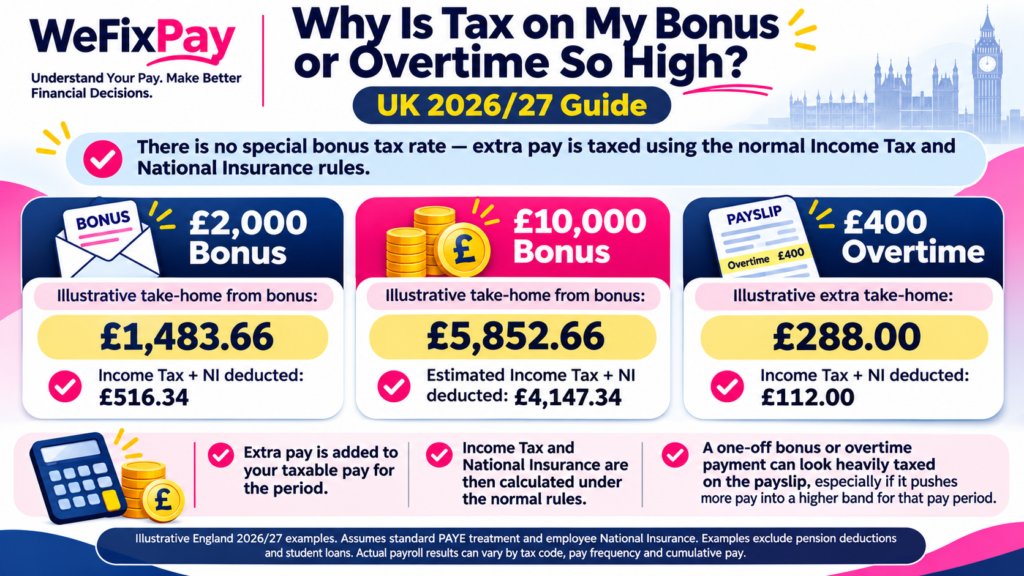
UK tax year 2026/27 · 6 April 2026 to 5 April 2027 · Last reviewed 21 November 2026 Why is tax on my bonus so high? There is no special UK bonus or overtime Income Tax rate. Bonuses and overtime are normally taxable employment earnings, added to your other pay. The extra money may sit […]
Student Loan Plans 1, 2, 4, 5 and Postgraduate: Which Plan Am I On? (2026/27)
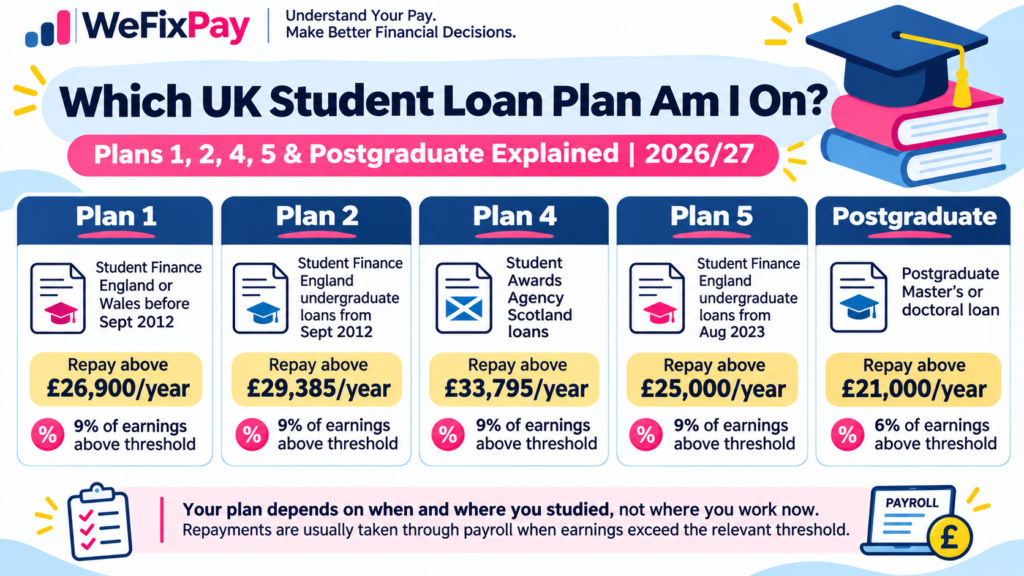
UK tax year 2026/27 · 6 April 2026 to 5 April 2027 Student loan plans explained: if you are wondering whether you are on Plan 1, Plan 2, Plan 4, Plan 5 or a Postgraduate Loan, the answer usually depends on which student finance organisation funded you, when you started and what you studied. Your […]
Salary Sacrifice vs Net Pay vs Relief at Source Explained (2026/27)
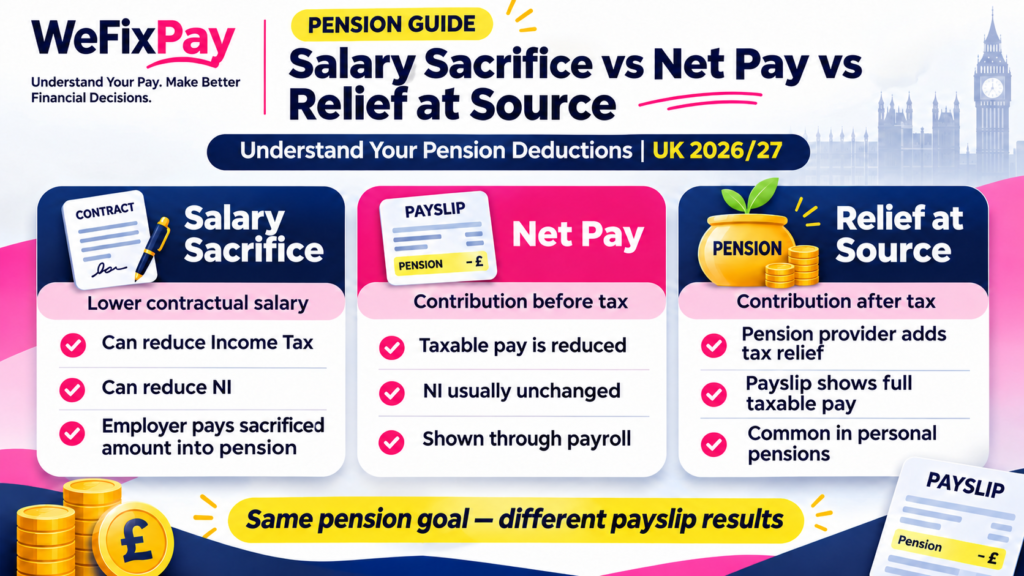
Salary sacrifice vs net pay vs relief at source: these three workplace pension methods affect how contributions appear on your payslip, how you receive Income Tax relief and whether you save National Insurance. Three pension methods can produce three different-looking payslips — even when the same amount goes towards retirement. Net pay arrangements reduce your […]
How to Read a UK Payslip Line by Line (2026/27)
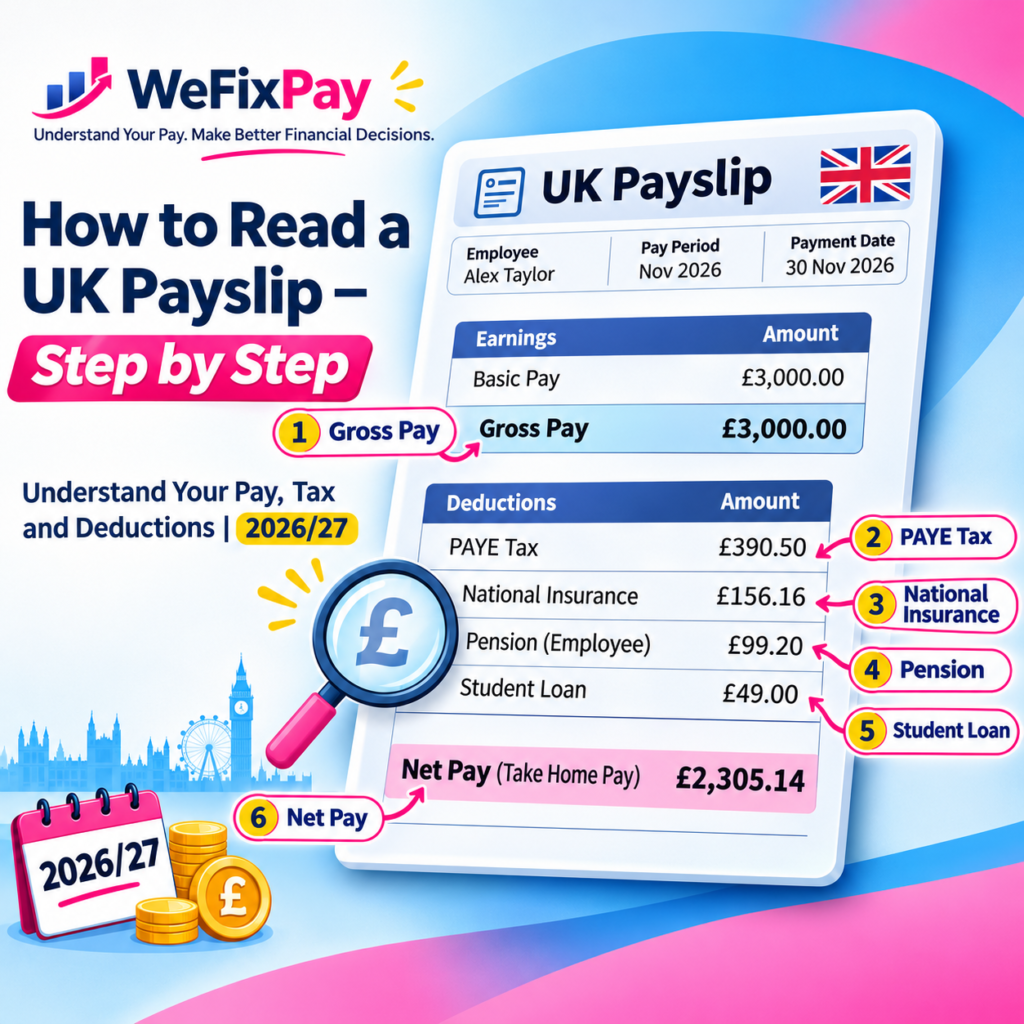
UK tax year 2026/27 · 6 April 2026 to 5 April 2027 Learning how to read a UK payslip makes it easier to check whether you have been paid correctly. This step-by-step guide shows where to find gross pay, PAYE Income Tax, National Insurance, pension deductions, student loan repayments and your final take-home pay. We’ll […]
Why Is My Take-Home Pay Lower Than the Calculator Says? 8 Causes
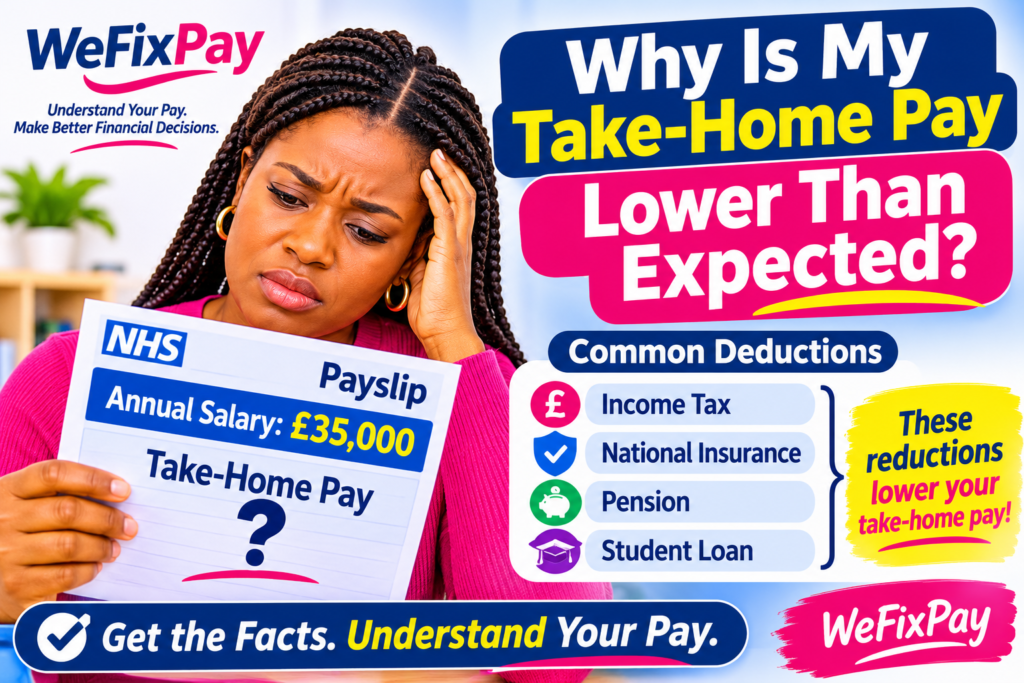
Is your take-home pay lower than expected? A salary calculator provides an estimate, but your actual payslip may include deductions or payroll adjustments that change the amount you receive. UK tax year 2026/27 (6 April 2026 to 5 April 2027) If your payslip shows less than a salary calculator predicted, the reason is often that […]
UK Tax Codes Explained 2026/27: What 1257L, BR, 0T and K Mean
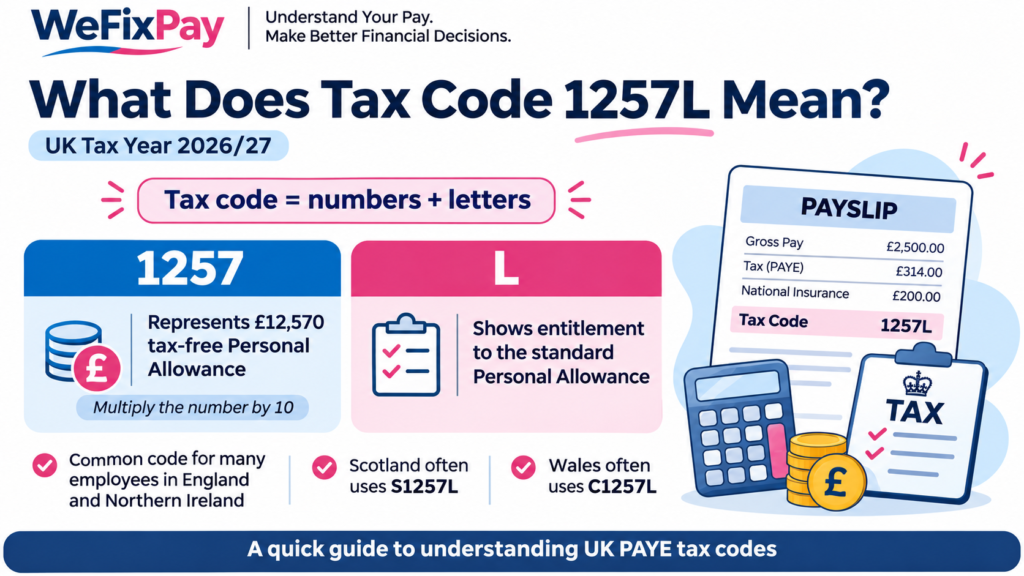
UK tax codes explained: What does your UK tax code mean? Your tax code tells your employer or pension provider how to calculate Income Tax through PAYE. The standard code for many employees in England and Northern Ireland in 2026/27 is 1257L, reflecting a £12,570 Personal Allowance. In Scotland it is commonly S1257L, and in […]
How Universal Credit Changes When Your Salary Increases 2026/27

A salary increase affects Universal Credit because the payment is means-tested and adjusted according to your household earnings. If you or your partner are working, a higher salary can reduce the amount of Universal Credit you receive. For every £1 of earnings, Universal Credit is generally reduced by 55p. Some households can earn a certain […]
NHS Band 6 Take-Home Pay After Tax 2026/27
If you work as an NHS Band 6 member of staff, your take-home pay will be lower than your basic salary after deductions such as Income Tax, National Insurance and NHS pension contributions. Looking for other NHS pay bands? See our NHS Pay Calculator & Pay Bands 2026/27 guide for Bands 2 to 6, take-home […]
NHS Band 5 Take-Home Pay After Tax 2026/27

If you work as an NHS Band 5 member of staff, your take-home pay will be lower than your basic salary after deductions such as Income Tax, National Insurance and NHS pension contributions. The amount you actually receive depends on several factors, including where in the UK you work, your position on the Band 5 […]
NHS Band 4 Take-Home Pay After Tax 2026/27

If you work as an NHS Band 4 member of staff, your take-home pay will be lower than your basic salary after deductions such as Income Tax, National Insurance and NHS pension contributions. The amount you actually receive depends on several factors, including where in the UK you work, your position on the Band 4 […]